

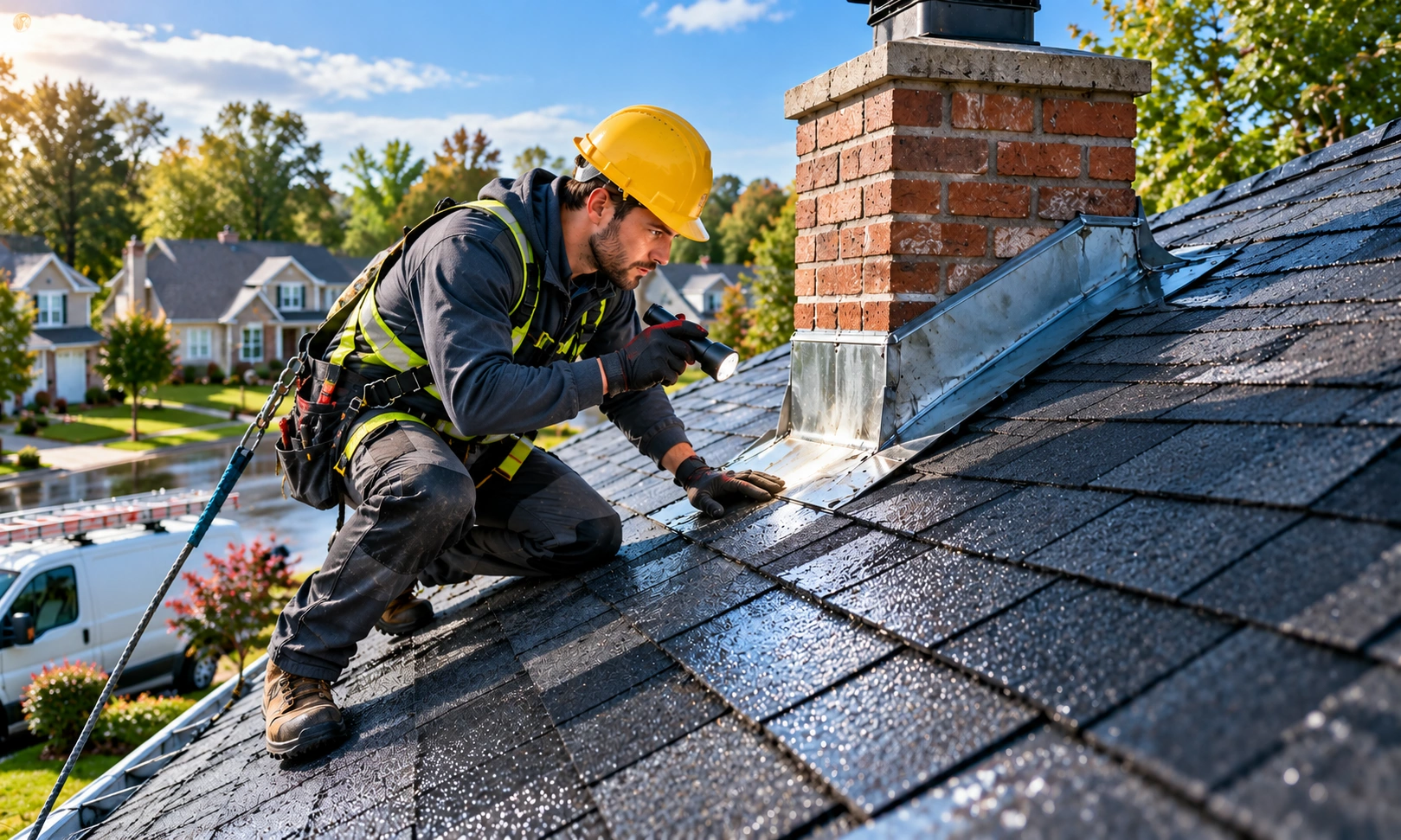
A leaky roof rarely stays a small problem for long. What starts as a faint water stain on the ceiling can turn into rotted decking, mold growth, and a full insulation replacement within a single rainy season. The good news: most roof leaks can be traced to a specific point of failure — a cracked shingle, a gap in the flashing, a worn vent boot, or failed sealant — and repaired without replacing the entire roof.
This guide covers how to fix a leaky roof from both the inside and outside, how much repairs typically cost, how long they take, and what to do if you rent rather than own.
Quick Answer
Knowing how to fix a leaky roof starts with acting fast: stop the spread of water first. place a bucket under the drip, relieve any bulging ceiling drywall by puncturing its lowest point, and cover the suspected roof area with a weighted tarp until the weather clears. Once conditions are dry and safe, trace the leak up-slope from the interior stain, then repair or replace the damaged shingles, flashing, or sealant at the actual source.
Signs You Have a Roof Leak
Before you learn how to fix a leaky roof, you first need to confirm you actually have one — here are the clearest warning signs:
- Brown or yellow ceiling stains, often ring-shaped
- Peeling paint or bubbling drywall on ceilings and upper walls
- Musty odors in the attic or top-floor rooms
- Damp or compressed insulation, or visible mold in the attic
- Missing, curling, or cracked shingles, exposed drip edge, or a damaged ridge cap visible from the ground
- Daylight visible through the roof deck in the attic
- Sagging roof truss or decking, a sign of long-term water damage
- Rising energy bills, often linked to moisture-damaged insulation
If you notice any of these, it’s worth investigating right away — a small leak can double in severity during a single heavy rainstorm.
How to Find a Roof Leak (Inside and Outside)
Step 1: Start in the Attic
Bring a flashlight and check the underside of the roof deck for:
- Water trails or dark staining along the rafters and roof truss
- Wet or compressed insulation
- Rusted nail tips — condensation on exposed nails is a commonly overlooked leak source
Step 2: Trace Uphill
Water travels down the roof’s pitch before it drips into your living space, so the true leak point is almost always higher up-slope than the ceiling stain — sometimes several feet away.
Step 3: Inspect the Roof Exterior
From a stable ladder (never walk on a wet or steep roof), check:
- Flashing around chimneys, skylights, and vent pipes
- Roof valleys, where two slopes meet and water volume is highest
- Shingle edges, drip edge, and ridge cap near the roofline
- Sealant or caulking around any roof penetration
- The condition of the underlayment or ice and water shield if shingles have lifted
Step 4: Run a Controlled Water Test
If the source still isn’t visible, have someone run a garden hose slowly over one roof section at a time — starting low and working upward — while another person watches the attic for the first sign of dripping.
How to Fix a Leaky Roof From the Inside
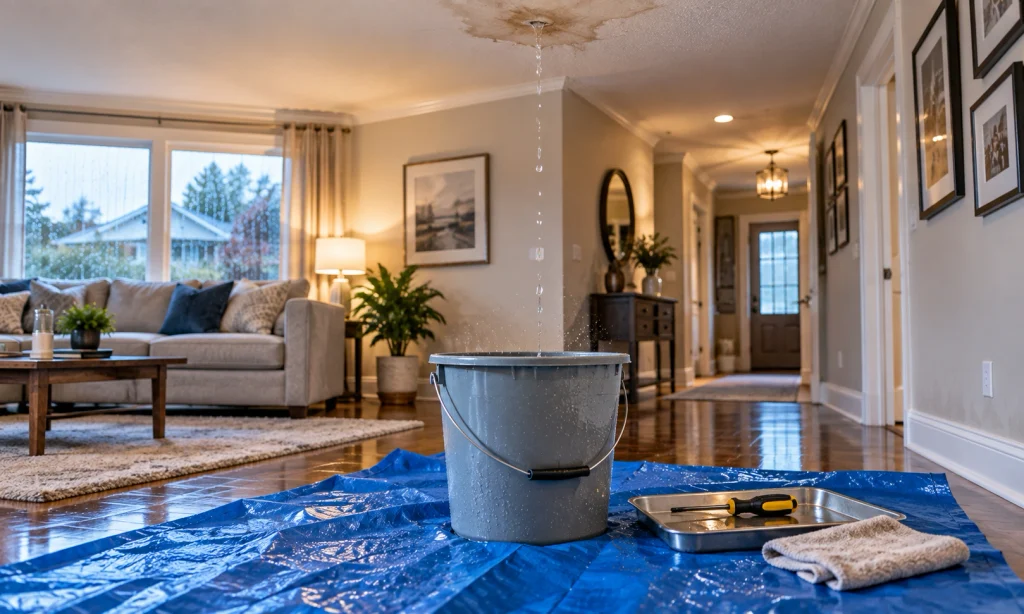
When you can’t safely access the roof — during an active storm, for example — these interior steps limit damage:
- Contain the water. Place a bucket or bin under the drip and lay down towels or a tarp.
- Relieve ceiling bulges. If drywall is bulging with trapped water, carefully puncture the lowest point with a screwdriver so it drains into a bucket instead of collapsing.
- Move furniture and valuables away from the affected area.
- Apply roofing sealant from inside the attic if the leak point is visible and reachable — this buys time but is not a permanent fix.
- Photograph the damage before starting repairs, in case you need to file an insurance claim later.
How to Fix a Leaky Roof From the Outside
Once conditions are dry and safe, repair the leak at its actual source:
- Clear debris from the leak area so the damage is fully visible.
- Remove damaged shingles with a flat pry bar, lifting surrounding shingles gently to avoid cracking them.
- Inspect and replace the underlayment if it’s torn, brittle, or saturated.
- Install new shingles, following the manufacturer’s nailing pattern, then seal the edges with roofing cement.
- Reseal or replace flashing around chimneys, vents, and skylights — corroded or bent flashing should be replaced, not just resealed.
- Check roof valleys and the drip edge, which handle the highest water volume and fail more often than flat roof sections.
Safety note: Roof-level repairs should only be attempted in dry, calm weather, with proper fall protection. Never work on a roof during active rain, high wind, or after dark.
Fixing Common Leak Sources
The table below breaks down how to fix a leaky roof based on its exact cause, since the right repair depends entirely on where the water is entering.
| Leak Source | Typical Fix |
| Cracked or missing shingles | Replace individual shingles; reseal exposed edges |
| Damaged flashing (chimney, wall, valley) | Re-caulk minor gaps; replace flashing if corroded or bent |
| Roof vent boot | Replace the rubber gasket, which degrades faster than the metal base |
| Skylight seal failure | Reseal with a skylight-rated sealant; replace the full seal kit if leaking recurs |
| Clogged gutters or blocked soffit vents | Clean gutters and downspouts; add gutter guards |
| Ice dams (cold climates) | Improve attic insulation and ventilation to equalize roof-deck temperature |
| Worn EPDM, TPO, or membrane roofing | Patch small tears with compatible membrane tape; reseal seams |
Fixing Leaks on Mobile Homes, Campers, and in Winter
Mobile home roofs typically use a rubber (EPDM) or metal roof-over system rather than asphalt shingles. Leaks usually occur at seams, screw penetrations, or the roof edge trim. Fix these with a rubber-roof-specific sealant or seam tape rather than standard asphalt roofing cement, which won’t bond properly to rubber or metal.
Camper and RV roofs face similar issues — most leaks form around vent covers, antenna mounts, and roof-edge seams due to constant vibration and temperature swings. Inspect and reseal these points at least once a year with an RV-rated sealant.
Winter leaks are frequently caused by ice dams rather than a damaged roof. Melting snow refreezes at the colder roof edge, backing water up under the shingles. The long-term fix is improving attic insulation and ventilation; a short-term fix is safely removing snow buildup with a roof rake before it melts and refreezes.
Roof Leak Repair Cost
The cost of how to fix a leaky roof varies depending on the cause, roofing material, and accessibility:
- Minor sealant or caulking repair: $150–$400
- Shingle replacement (small section): $300–$1,000
- Flashing repair or replacement: $300–$1,500
- Full professional leak diagnosis and repair: $400–$2,000+
- Extensive repair with decking replacement: $2,000–$10,000+
The cost to fix a roof leak rises sharply once water has reached the decking, insulation, or interior drywall — which is exactly why early detection keeps repair costs down. For a detailed, region-specific cost breakdown, see our roof leak repair cost calculator.
How Long Does It Take to Fix a Leaky Roof?
- Minor, accessible leak (single shingle or sealant repair): 1–3 hours
- Flashing replacement or multi-point repair: half a day to a full day
- Repairs involving decking or underlayment replacement: 1–3 days, weather dependent
- Full roof section replacement: several days to a week
Landlord and Tenant Responsibilities for Roof Leaks
In most jurisdictions, the roof is considered part of a property’s structural integrity, which makes leak repair a landlord’s legal responsibility rather than the tenant’s. General guidelines (verify against your local and state/provincial law, since timelines vary):
- Residential landlords are typically required to begin repairs within a “reasonable time” after being notified — often interpreted as anywhere from 24–48 hours for urgent leaks to 7–14 days for non-emergency repairs.
- Commercial landlords usually operate under lease-specific repair clauses rather than blanket tenant-protection statutes, so the timeline depends heavily on the commercial lease terms.
- Tenants should report leaks in writing and keep documentation, since “reasonable time” standards are often enforced through local housing authorities or small claims court if a landlord doesn’t act.
This section is general information, not legal advice — check your local tenancy laws or consult a housing attorney for your specific situation.
Is a Leaking Roof Covered by Insurance?
Most standard homeowners’ insurance policies cover sudden, accidental roof damage — for example, leaks caused by a storm, falling tree limb, or wind damage. Leaks resulting from long-term neglect, normal wear, or a roof past its expected lifespan are typically not covered, since insurers treat those as a maintenance issue rather than a covered peril.
Before filing a claim:
- Photograph the damage extensively, both inside and outside.
- Get a written repair estimate from a licensed roofing contractor.
- Review your policy’s specific roof-damage exclusions and your roof’s age relative to any “roof schedule” clause, which some insurers use to limit payouts on older roofs.
When to Call a Roofing Professional

DIY repairs work well for small, accessible leaks, but call a licensed roofing contractor if:
- The leak is near electrical wiring or a chimney
- You notice structural sagging in the roof deck or truss
- The roof is steep, high, or otherwise unsafe to access
- A leak recurs after a DIY repair
- Your roof is older than 15–20 years, since one leak often signals broader wear across the roofing system
- You’re dealing with an insurance claim and need a documented professional estimate
Many licensed roofers offer free inspections, and a second opinion before a major repair is generally worth the time and cost.
Preventing Future Roof Leaks
- Once you know how to fix a leaky roof, the next step is making sure you don’t have to do it again (spring and fall)
- Clean gutters and downspouts regularly to prevent water backup
- Trim overhanging branches that drop debris or scrape shingles
- Ensure attic insulation and ventilation are adequate, especially in cold climates prone to ice dams
- Replace worn flashing, drip edge, and sealant proactively — before they fail during a storm
- Track your roof’s age against its expected lifespan (roughly 20–30 years for asphalt shingles, 40–70 years for metal roofing) to plan replacement before leaks become frequent
Frequently Asked Questions
How do I stop a roof from leaking in heavy rain?
You generally can’t do a permanent repair mid-storm. Contain the interior water with buckets and a drainage hole in any bulging ceiling, and if it’s safe, place a weighted tarp over the suspected exterior leak area. Complete the actual repair once conditions are dry and calm.
How do I fix a leaking roof from the inside?
Contain and redirect the water first — a bucket under the drip and a small drainage hole in a bulging ceiling prevent bigger damage. If the leak point is accessible from the attic, a temporary application of roofing sealant can slow it until you complete an exterior repair.
Can I fix a leaky roof myself, and how hard is it?
For small, accessible leaks — a cracked shingle, a sealant gap, a worn vent boot — most homeowners with basic tools and ladder confidence can complete the repair in a few hours. Structural damage, steep or high roofs, or leaks near electrical systems are safer left to a licensed roofing contractor.
What does roof leak repair sealant do, and which type should I use?
Roofing sealant fills small gaps and cracks around flashing, vents, and shingle edges to create a waterproof barrier. Silicone-based sealants offer the most flexibility and longevity for asphalt and metal roofs, while EPDM- or rubber-specific sealants are needed for mobile home and RV roofing, since standard asphalt cement won’t bond to rubber membranes.
How do I find a roof leak from the outside?
Inspect flashing, valleys, vent boots, and shingle edges for cracks, gaps, or missing sections. Because water travels downhill along the roof’s pitch before it drips inside, check areas above and to the sides of the interior stain — not just directly overhead.
How do I fix a leaky roof without replacing the whole roof?
Most leaks are localized to one shingle, one flashing joint, or one penetration point rather than the entire roofing system. Repairing that specific area is usually sufficient unless the roofing material overall has reached the end of its expected lifespan.
Conclusion
Learning how to fix a leaky roof properly means treating it as an urgent task, not a “wait and see” problem — the longer water sits against decking, insulation, or drywall, the more expensive and invasive the eventual fix becomes. Most leaks trace back to one specific failure point: a cracked shingle, worn flashing, a failed vent boot, or degraded sealant, and once you find that source, the repair itself is usually straightforward and affordable.
The short version: contain the water immediately, trace the leak up-slope rather than assuming it’s directly above the stain, repair the specific failure point rather than the whole roof, and bring in a licensed roofing contractor for anything structural, electrical-adjacent, or high off the ground. Pair that with a twice-yearly inspection habit and prompt attention to small issues, and you’ll catch most leaks long before they become a five-figure repair.
If you’re not confident diagnosing the source yourself, a professional roof inspection is inexpensive relative to the cost of an undetected leak — and for more home-repair breakdowns like this one, browse our related guides on HomeDiscovering.
